

REAL POTENCY.
REAL COFFEE EXPERTISE.
REAL SCIENCE
Why Our Formula Is Different
Most mushroom coffee starts with a wellness claim.
We started with a harder question: How do you deliver a meaningful mushroom dose in coffee people actually want to drink every day?
That meant solving for taste, dose, extraction and benefit.


Five sciences, one cup
Tap any pillar to explore how it works.
Everything you need to trust the formula lives right here.
The Science Of Taste
Coffee should still taste like coffee. Our coffee is formulated by a craft coffee R&D leader with 23 years of experience.
No Grit, No Funk, No Earthy Aftertaste.
Most functional coffees taste like the health category they came from — earthy, gritty, muddled. We started from the opposite direction: Specialty coffee first, functional benefits engineered in.
Craft Coffee R&D
Developed by a coffee formulator with 23 years of specialty roasting experience.
Soluble Extracts
Fully soluble mushroom extracts — no sediment, no grit at the bottom of the cup.
No Earthy Funk
Sensory-tuned so mushroom compounds support, but don't dominate, the coffee profile.
The Science Of Dose
5,000mg of mushroom benefits per daily serving, no competitor can match us.
Most mushroom coffees put a mushroom on the label but a rounding-error dose in the cup. Wunderground is engineered around a 5,000mg proprietary functional blend per daily serving.
Competitor doses shown are illustrative ranges based on publicly disclosed labels for popular mushroom coffee products.
The Science Of Extraction
Dual extraction method captures both water-soluble beta-glucans and alcohol-soluble compounds from 100% fruiting body mushrooms.
Extraction is where a lot of mushroom products quietly fall apart. Raw powder, mycelium grown on grain, and single-method extracts all leave valuable compounds behind. We use a dual extraction method so nothing is missed.
Water Extraction
B-Glucans
Hot Water Pulls The Immune-Supportive Beta-Glucans From The Mushroom Cell Walls.
Alcohol Extraction
Triterpenes
Alcohol Captures The Triterpenes And Other Compounds Water Alone Cannot Reach.
Dual extraction keeps both the beta-glucans and the compounds alcohol-only methods capture. Nothing left behind.
Fruiting body vs mycelium
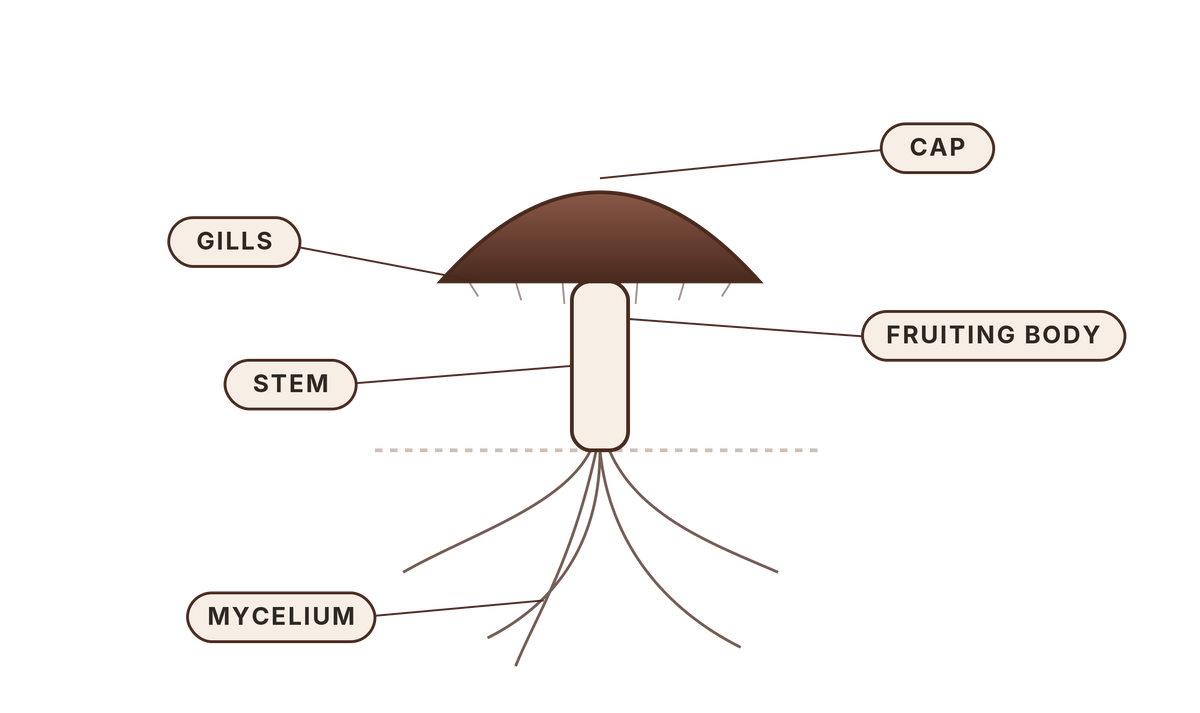
Why fruiting body is better
The fruiting body is the actual mushroom: the cap, gills, and stem you see above ground. It is the most researched, concentrated part of the organism and contains the highest levels of beta-glucans, triterpenes, and other bioactive compounds.
Why mycelium on grain falls short
Mycelium is the underground root system. When grown on grain, it is often harvested before it can fruit, leaving the final product diluted with starch and lower in the active compounds that define a mushroom's benefits.
What the research favors
Higher Beta-Glucans
Fruiting bodies consistently test higher in beta-glucans, the immune-active fiber most people are buying mushroom products for.
More Triterpenes
Reishi and Chaga fruiting bodies supply triterpenes and related compounds that mycelium-on-grain products rarely match.
Less Filler
100% fruiting body means no grain substrate, no starch, and no undisclosed mycelial biomass diluting the dose.
The Science Of Beta-Glucans
22.7% lab-verified beta-glucan content, the mushroom fiber your body recognizes for immune and gut support.
Beta-glucans are a type of fiber found in the cell walls of mushrooms. They're recognized by immune cells and also act as prebiotic fiber, helping feed beneficial gut bacteria — which matters because gut health, immune function, metabolism and mood are deeply connected.
Gut-brain axis
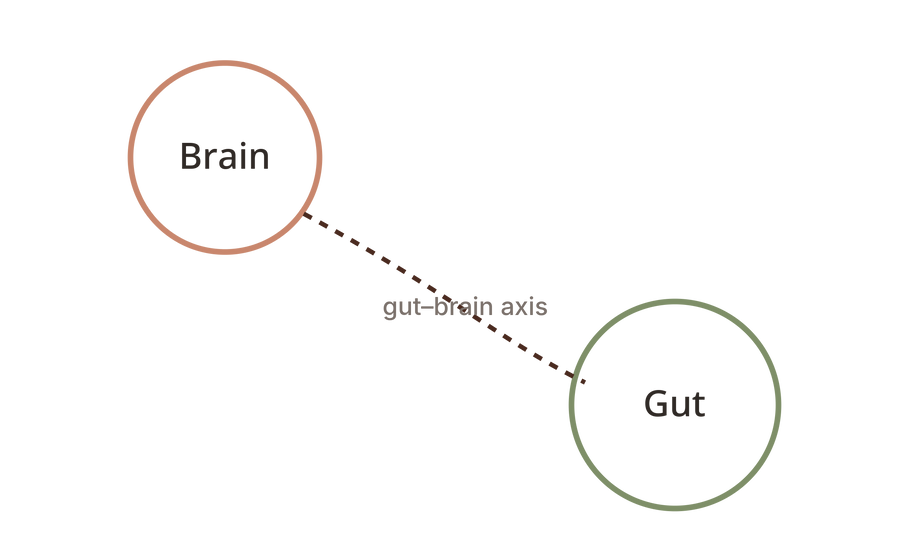
Beta-Glucans Act As Prebiotic Fiber, Feeding Beneficial Gut Bacteria That Send Signals Along The Gut-Brain Axis To Influence Immune Readiness, Metabolism, And Mood.
Beta-glucans in the mushroom cell wall
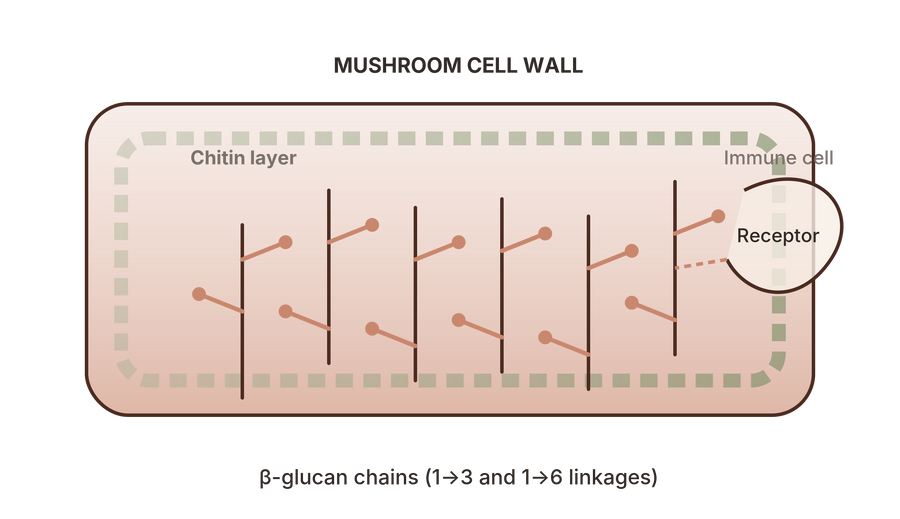
Why Binding Matters: Immune cells carry receptors shaped to recognize the specific 1→3/1→6 structure of mushroom beta-glucans. When they bind, they prime “trained immunity”, a faster, more efficient immune response without overstimulating the system. This is the mechanism behind the immune benefits tied to mushroom beta-glucans in the research literature.
Beta-glucan anatomy
1→3 Backbone
The long glucose chain running through the mushroom cell wall that immune receptors recognize.
1→6 Branches
Side branches that give each mushroom's beta-glucan its unique shape and immune activity.
Receptor Binding
Immune cells detect these structures and trigger a trained immune response.
The Science Of The Quad Squad
Four mushrooms, four jobs. Selected as a system to support focus, energy, calm, and immunity.
Four mushrooms. Not a random stack, but a system. We call it the Quad Squad, and each one plays a distinct role that supports the others.
Meet the Quad Squad: Lion's Mane, Cordyceps, Reishi, and Chaga. Tap each player to see its position, research, and key compounds.
 Lion's ManeHericium Erinaceus
Focus, cognitive clarity, neural health, mood support.
Lion's ManeHericium Erinaceus
Focus, cognitive clarity, neural health, mood support.

What the research suggests
One Of The Most Promising Mushrooms For Cognition And Mood, With Emerging Human Research Supporting Its Role In Cognitive Performance And Stress.
Key compounds
Beta-Glucans, Hericenones, Isoindolinones, Hericene Compounds.
 CordycepsOphiocordyceps Sinensis
Natural energy, stamina, oxygen utilization, performance support
CordycepsOphiocordyceps Sinensis
Natural energy, stamina, oxygen utilization, performance support

What the research suggests
Research support for exercise performance and energy metabolism, with much of the human evidence focused on specific researched strains.
Key compounds
Cordycepin and analogs, polysaccharides, sterols.
 ReishiGanoderma Lucidum
Calm, stress resilience, immune modulation, sleep support
ReishiGanoderma Lucidum
Calm, stress resilience, immune modulation, sleep support

What the research suggests
A long history of use and a growing body of research around immune support, stress response, and sleep.
Key compounds
Beta-glucans and triterpenes.
 ChagaInonotus Obliquus
Antioxidant support, immune support, cellular resilience
ChagaInonotus Obliquus
Antioxidant support, immune support, cellular resilience

What the research suggests
Rich in compounds associated with antioxidant activity, with a deep history of traditional use — human clinical research is still emerging.
Key compounds
Polysaccharides, triterpenes, polyphenols, melanin, betulinic acid, inotodiol.


Meet Our Medical Board Advisor,
Dr. Arti Chandra, MD, MPH
Dr. Arti Chandra is a board-certified Family Physician, Functional Medicine practitioner (IFMCP), and Integrative Medicine specialist with a Master's in Public Health. She has spent more than 15 years bringing food-as-medicine and lifestyle-based care into hospital and clinical settings.
As Wunderground's Medical Advisor, she helps us bridge the gap between traditional medicinal mushroom research and the daily coffee ritual.
EXPLORE MUSHROOM RESEARCH
Studies are provided for education and transparency, they do not constitute clinical claims for Wunderground's specific formula, dose, and population.
Medicinal Mushrooms: Bioactive Components, Nutritional Value and Application in Functional Food (Review)
A comprehensive look at the bioactive components, nutritional value and use of medicinal mushrooms in functional foods.
Mushroom Consumption And Cognitive Performance
Regular mushroom consumers showed better cognitive performance across multiple domains, with a dose-dependent relationship.
Mushroom Intake and Breast Cancer Risk
Mushroom intake may be inversely associated with risk of breast cancer. Educational context only — not a Wunderground claim.
Active compound from Lion's Mane boosts nerve growth and enhances memory (University of Queensland)
Researchers identified an active compound in Lion's Mane that promotes nerve growth and memory in preclinical models.
Hericium erinaceus may improve speed of performance and reduce subjective stress in healthy young adults
Suggests Lion's Mane may improve performance speed and reduce subjective stress in healthy young adults.
Lion's Mane and menopause-related stress and depression
Women taking Lion's Mane daily for 4 weeks showed improvements in menopause-related stress and depression vs. placebo.
Lion's Mane and cognitive function in older adults with mild cognitive impairment
Oral Lion's Mane significantly improved cognitive function in 50–80 year-old adults with mild cognitive impairment.
Cordyceps improves exercise performance in older adults
Supplementation supported improved exercise performance in older adults.
Cordyceps and respiratory health
Overview of Cordyceps' role in respiratory function and related bioactivity.
Cordyceps and tolerance to high-intensity exercise
Supplementation was associated with improved tolerance to high-intensity exercise.
Reishi bioactive compounds — overview
Overview of Ganoderma lucidum's bioactive compounds and their beneficial effects.
Reishi and sleep support
Explores mechanisms by which Reishi may support sleep.
Reishi and cardioprotective effects
Reports cardioprotective activity of Ganoderma lucidum in experimental models.
Reishi and fatigue in breast cancer patients
Reishi supplementation was associated with reduced fatigue in breast cancer patients. Educational context only.
Reishi and prostate health
Explores Reishi's effect on prostate-related outcomes. Educational context only.
Chaga — therapeutic properties review
A modern review of the therapeutic properties associated with Inonotus obliquus.
Chaga — biological properties
Overview of Chaga's biological properties, including antioxidant and immune-related activity.
Answers Before You Brew. 🍄
How long does it take to feel benefits?
Some people may notice changes in energy, focus, or digestion quickly, while other benefits build with consistent daily use over several weeks. Results vary based on diet, sleep, stress, health, and consistency.
How can I support the benefits?
Pair Wunderground with a fiber-rich diet, hydration, sleep, movement, and whole foods. Prebiotic fibers work best as part of a broader gut-supportive lifestyle.
Why fruiting body instead of mycelium?
The fruiting body is where beta-glucans and many other bioactives concentrate. Mycelium grown on grain typically contains less of these compounds and more filler starch.
Is Wunderground safe to drink daily?
Yes — Wunderground is designed as a daily coffee ritual using USDA Organic mushroom extracts in food-grade amounts. Consult your doctor if pregnant, nursing, or on medication.
How much caffeine is in it?
Roughly the same as a standard cup of specialty coffee — the mushrooms are added to real coffee, not a substitute for it.

Footnotes
Fruiting body vs. mycelium-on-grain
1. McCleary, B.V. & Draga, A. (2016). “Measurement of β-Glucan in Mushrooms and Mycelial Products.”Journal of AOAC International, 99(2), 364–373. PubMed | Publisher
2. Chang, S.T. & Wasser, S.P. (2012). “The Role of Culinary-Medicinal Mushrooms on Human Welfare with a Pyramid Model for Human Health.”International Journal of Medicinal Mushrooms, 14(2), 95–134. PubMed | Public PDF
Beta-glucan structure and immune recognition
3. Vetvicka, V., Vannucci, L., Sima, P. & Richter, J. (2019). “Beta Glucan: Supplement or Drug? From Laboratory to Clinical Trials.”Molecules, 24(7), 1251. PubMed
4. Murphy, E.J., Rezoagli, E., Major, I., Rowan, N.J. & Laffey, J.G. (2021). “β-Glucans.”Encyclopedia, 1(3), 831–847.
Trained immunity
5. Netea, M.G., Joosten, L.A.B., Latz, E., et al. (2016). “Trained Immunity: A Program of Innate Immune Memory in Health and Disease.”Science, 352(6284), aaf1098. Science
6. Netea, M.G., Latz, E., Mills, K.H.G. & O’Neill, L.A.J. (2015). “Innate Immune Memory: A Paradigm Shift in Understanding Host Defense.”Nature Immunology, 16, 675–679. PubMed | Nature
Gut microbiota and gut–brain axis
7. Jayachandran, M., Xiao, J. & Xu, B. (2017). “A Critical Review on Health Promoting Benefits of Edible Mushrooms through Gut Microbiota.”International Journal of Molecular Sciences, 18(9), 1934. PubMed
8. Cryan, J.F., O’Riordan, K.J., Cowan, C.S.M., et al. (2019). “The Microbiota-Gut-Brain Axis.”Physiological Reviews, 99(4), 1877–2013. PubMed | Journal